

Out of curiosity, I measured the amount of network traffic generated by Windows Update during a bare metal installation of the OS when there are no updates to install: I was using the 25H2 July WIM file from Microsoft and updating it as part of the DeployR bare metal installation process, so the only expected updates would be for Defender updates.
The easiest way to do this measurement is to get the number of bytes downloaded from each Delivery Optimization download job, since the Windows Update agent is supposed to be smart enough to download only the pieces of a particular update that are still needed on the device. The hard part of gathering the bytes downloaded is that the built-in Get-DeliveryOptimizationLog PowerShell cmdlet stuffs this data into a single string, instead of providing it in a more useful form that separates each value.
To solve that problem, we’ve published a PowerShell module called TwoPint.DOCmdlets to the PowerShell Gallery. It has a simple Get-TwoPintDOJob cmdlet that gets the needed information, which we can then have PowerShell summarize:
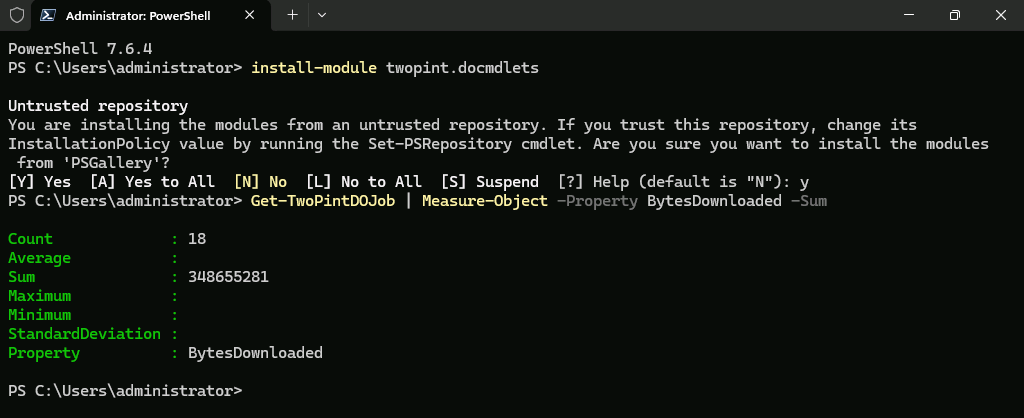
So 18 DO jobs totaling about 340MB. That’s not too bad.
For comparison, let’s go back a month and use the 25H2 June media, so that the July cumulative update needs to be installed.

That increased the traffic to 38 DO jobs totaling 1.7GB, so nearly 1.3GB additional payload needed — in one month. Yikes. And that takes over 20 minutes to download and install (even with MCC already having the content cached, even longer for the first client downloading).
If you need any more motivation to update your Windows 11 WIM file each month (usually new ISOs are available a few days after Patch Tuesday), that is it. And it should also reinforce the importance of properly configuring Delivery Optimization.
p.s. Still looking for an MDT replacement? DeployR Community is available now, and it’s free.
p.p.s. Now that the August update is out, I can repeat this experiment using the July ISO and then updating it with the August CU:
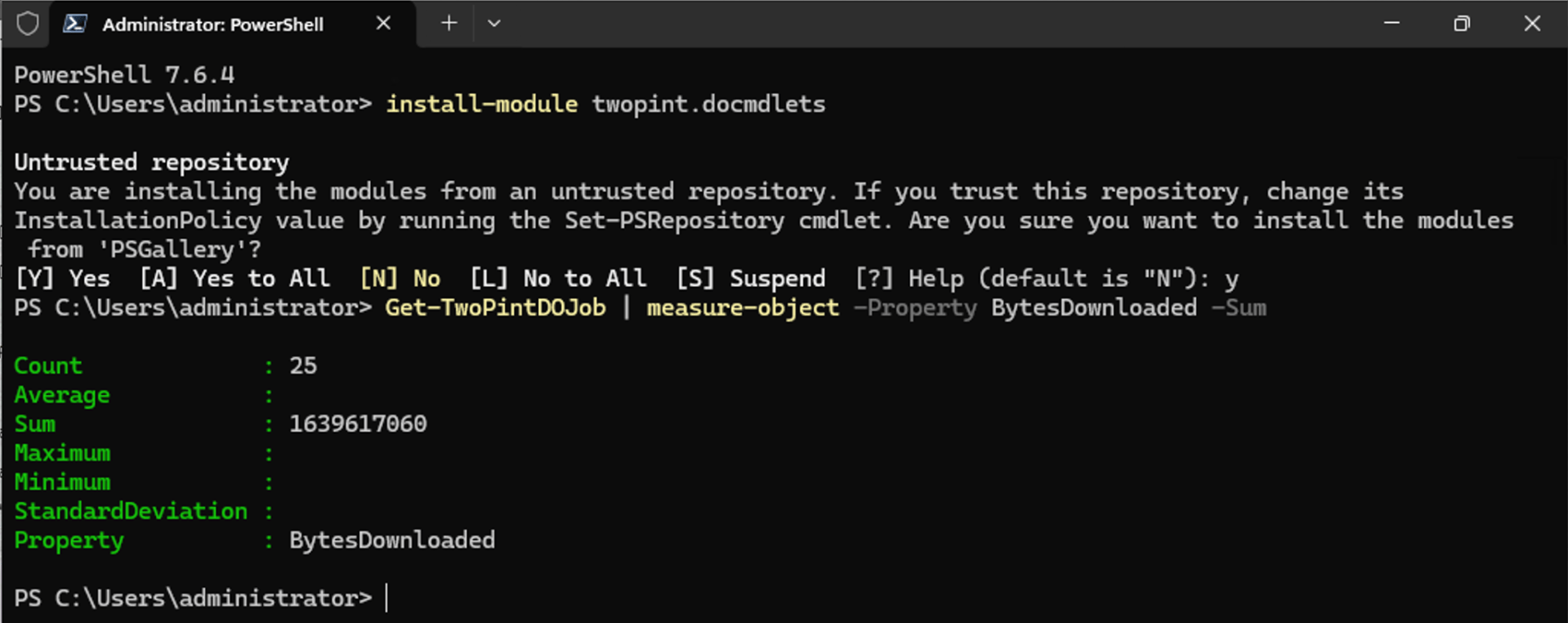
So another 1.6GB this month.


 Out of Office Hours
Leave a comment